

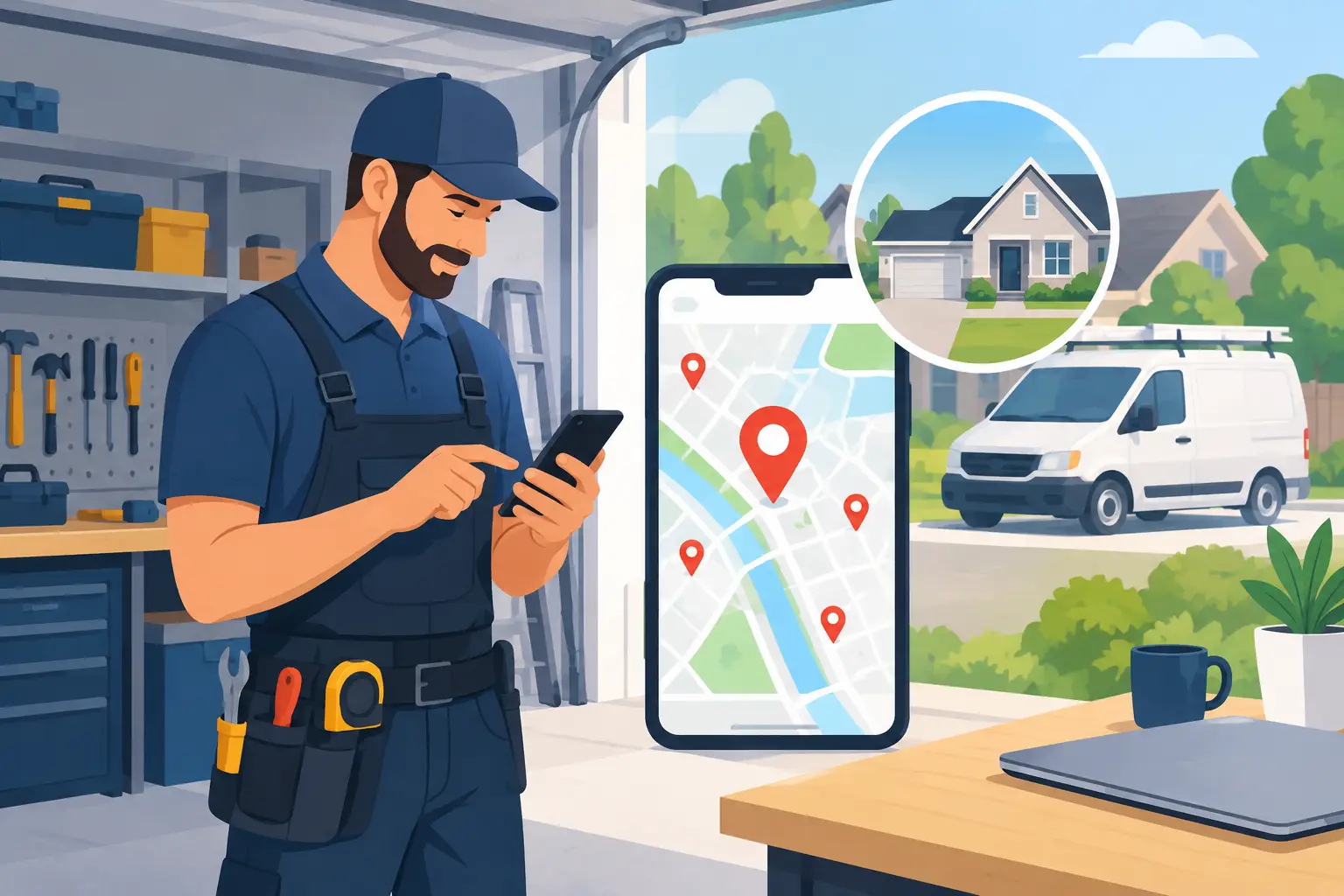
The homeowner searching for an emergency plumber, basement remodeler, roofer, or electrician is not looking for a marketing lesson. They are looking for a contractor they can call today and trust in their neighborhood. Local SEO for contractors puts your business in front of that person before they find the company down the road.
For most trades businesses, referrals will always matter. But referrals rise and fall. A steady local search presence gives you another source of work when the phone gets quiet, without forcing you to chase every lead across an entire state. The goal is not more random traffic. It is more qualified inquiries from the service areas you can actually serve profitably.
Why Local Search Is Where Contractors Win
Local search is built around intent. When someone types kitchen remodeling near me or furnace repair in [city], they are usually past the research stage. They have a problem, a project, or a deadline. Your job is to show up with enough proof that calling you feels like the safe choice.
Google considers relevance, distance, and prominence when deciding which local businesses to display. You cannot move your shop closer to every prospect, but you can make your services, service area, reputation, and business information clear. That gives search engines and homeowners fewer reasons to overlook you.
This is also why broad marketing messages often fail contractors. Ranking for general phrases that attract people outside your market does not fill your schedule. A well-built local strategy focuses on the towns, neighborhoods, and job types that match your crew, capacity, and ideal project size.
Build a Google Business Profile That Pulls Its Weight
Your Google Business Profile is often the first impression a local prospect gets of your company. It is not a set-it-and-forget-it listing. Treat it like a digital yard sign on the busiest road in town.
Start with the fundamentals: use your real business name, correct phone number, accurate website, hours, and primary category. Choose the category that most closely reflects your core service, not every service you could possibly offer. Then add relevant secondary categories where they are genuinely accurate.
Your description should plainly explain what you do, where you work, and why a homeowner should contact you. Avoid stuffing city names into every sentence. A clear statement such as serving homeowners across Naperville and nearby DuPage County with full kitchen renovations is more useful than a wall of keywords.
Photos matter because homeowners want evidence. Add current photos of completed projects, crew members, branded vehicles, shop work, before-and-after transformations, and details that show craftsmanship. A remodeling company should not rely on generic stock kitchens. A roofing contractor should not post only a logo. Real work builds confidence before the first call.
Keep the profile active by posting project updates, seasonal service reminders, and answers to common customer questions. If you offer a service area instead of serving customers at a storefront, set that up correctly. Do not create extra profiles for every town you want to target. Duplicate or misleading listings create problems that are harder to fix later.
Make Your Website Match the Way People Search
A strong Google profile can earn visibility, but your website has to turn that visibility into an estimate request. If a homeowner lands on a slow, vague page that does not explain where you work or what happens next, they will leave and call someone else.
Your core service pages should answer the questions prospects ask before reaching out: What do you do? What kinds of projects do you take on? Which areas do you serve? What does the process look like? How can they request an estimate?
Create service pages with real local value
A page for bathroom remodeling should do more than repeat bathroom remodeling in Chicago. Explain the type of bathrooms you renovate, your design-build process or installation approach, common scope options, expected timing, and examples of local work. Add original project photos and a direct next step, such as requesting a consultation.
Service area pages can work well when each page has useful, specific information. A page for Arlington Heights might mention the services offered there, project examples, permit or housing-style considerations when relevant, and how homeowners can book. Thin pages that swap one city name for another will not create lasting results.
For contractors covering a wide region, prioritize the communities that produce your best jobs. It is better to build authority in five high-value areas than to publish shallow pages for 40 towns your crew rarely visits.
Remove friction from the conversion path
A local visitor should be able to call or request an estimate in seconds. Put your phone number where it is easy to tap on mobile. Keep forms short enough that a homeowner will actually finish them. Ask for the details that help you qualify the job, such as project type, location, timeline, and preferred contact method.
Do not bury your service area or leave visitors guessing whether you handle their type of project. Clear expectations protect your time and improve lead quality. If you only take full remodels, say so. If you focus on commercial HVAC rather than residential repair, make that obvious before the form submission.
Reviews Are a Local Ranking Signal and a Sales Tool
A five-star rating without recent reviews can look stale. A steady stream of specific, genuine feedback tells prospects that your company is active and dependable. It also gives search engines more confidence that people use and value your business.
The best time to ask is shortly after a successful project milestone, while the customer is happy and the work is fresh in their mind. Make the request simple. Your project manager or office team can send a short follow-up message that thanks the customer and asks them to share their experience.
Do not offer incentives for positive reviews or pressure customers to write a certain way. Instead, encourage details. Reviews that mention communication, cleanliness, workmanship, a finished deck, or a successful electrical panel upgrade are far more persuasive than a generic great job.
Respond to every review professionally. Thank positive reviewers by name when appropriate. For a negative review, avoid arguing in public. Acknowledge the concern, state that you take it seriously, and offer to resolve it directly. Future customers are watching how you handle pressure, not just how many stars you have.
Strengthen Local Trust Beyond Google
Your business information should be consistent wherever it appears online. That includes your company name, address or service-area setup, phone number, website, and hours. Small differences – an old phone number, a missing suite number, or two versions of your company name – can create confusion for both customers and search platforms.
Claim and maintain relevant industry and local business listings, but do not waste hours chasing every directory on the internet. Focus on accurate core listings and reputable places homeowners in your market may actually use. The value is consistency and credibility, not sheer volume.
Local relevance also grows when your company participates in the communities it serves. Sponsoring a youth team, supporting a neighborhood event, partnering with a local supplier, or completing recognizable projects can all create legitimate brand awareness. These efforts work best when they are real parts of your business, not manufactured marketing stunts.
Track Leads, Not Just Rankings
Rankings can be useful, but they are not the final score. A number-one position that produces low-budget jobs outside your service area is less valuable than a third-place result that brings three profitable remodeling consultations each month.
Track calls, form submissions, booked estimates, and closed jobs by source. Ask new leads how they found you, even when analytics suggests an answer. Marketing data is rarely perfect, and a quick question from your office team can reveal patterns that software misses.
Review performance by service and location. If roof replacement leads close well in one suburb but gutter repair calls consume time without producing revenue, adjust your pages, ads, and intake process accordingly. Local SEO is not a one-time setup. It is a system that improves as you learn what your market responds to.
Noble Media approaches this work the way a contractor approaches a job site: start with a clear plan, build the right foundation, and keep improving the details that affect the finished result. Your local presence should make it easier for the right homeowners to find you, trust you, and take the next step.
When referrals slow down, do not wait for the next busy season to fix the pipeline. Make sure the customers already searching in your service area can see the work, reputation, and professionalism behind your name.