

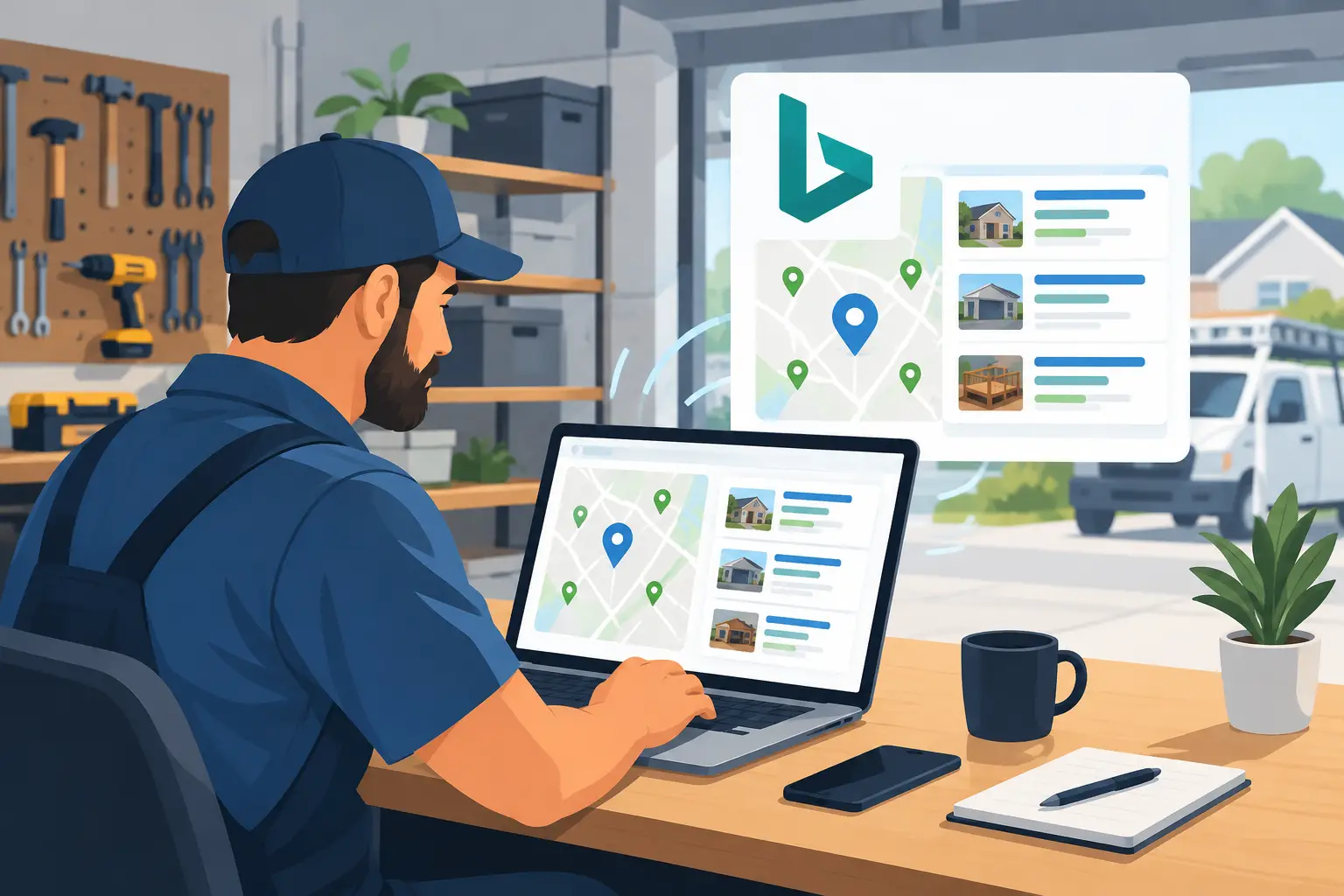
A homeowner with a leaking roof, an outdated kitchen, or a failing furnace rarely waits around for a referral. They search, compare a few local companies, and call the contractor who looks available, credible, and close by. Bing ads for contractors can put your business in that decision window, often at a lower cost per click than the more crowded search platforms.
That does not mean Bing is a magic lead faucet. It works best as part of a focused local lead system: clear service-area targeting, job-specific ads, a landing page that makes calling easy, and a team prepared to follow up quickly. For established trade businesses, it can be a practical way to reduce dependence on unpredictable referrals and own more of the searches happening in your market.
Why Bing Ads Can Work for Local Contractors
Bing Ads is now managed through Microsoft Advertising. Its search ads can appear across Bing, Yahoo, AOL, Microsoft Edge, and partner search placements. The exact audience varies by location and campaign settings, but the opportunity is straightforward: homeowners use more than one search engine, especially on desktop computers at work or at home.
For contractors, that audience can be valuable. Many higher-intent searches happen when someone is researching a major project, comparing renovation companies, or dealing with a repair they cannot postpone. A person typing “bathroom remodeler near me” or “emergency plumber in [city]” is not looking for general inspiration. They are looking for a local business that can solve a real problem.
Microsoft Advertising also tends to have less advertiser competition in many trades and markets. That can mean lower click costs, though it depends on your city, season, service, and how aggressively competitors are bidding. Lower costs do not automatically make a campaign profitable. A cheap click from outside your service area or for a job you do not take is still wasted budget.
The better question is not, “Should we use Bing instead of Google?” It is, “Can Bing add qualified local leads without pulling attention away from the channels already working?” For many contractors, the answer is yes. It is usually a complementary channel, not a replacement for Google Ads, local SEO, reviews, or a strong referral network.
Bing Ads for Contractors Start With the Right Jobs
Do not begin by advertising every service your company can perform. Start with the work that has healthy margins, fits your crew capacity, and brings in the type of customer you want more of.
A remodeling company may prioritize full kitchen renovations, basement finishing, and bathroom remodels over small handyman requests. An HVAC company may push furnace replacement during cold months and air conditioning installation before summer. A roofing contractor might focus on storm damage repairs, roof replacements, and commercial flat roofing, depending on its operating model.
Each priority service needs its own campaign or tightly organized ad group. This gives you control over budget, messaging, and results. Someone looking for “deck builder” should not land on a generic page listing decks, kitchens, bathrooms, and additions. Match the search to the service, then match the service to a page built to generate an inquiry.
Your keywords should reflect buying intent. Terms such as “roof replacement contractor,” “kitchen remodeling company,” “electrician near me,” and “foundation repair estimate” are often more valuable than broad research phrases like “roofing ideas” or “how much does a kitchen cost.” Research terms can have a place in a longer marketing funnel, but they are rarely where a lean local ad budget should begin.
Negative keywords matter just as much. Add exclusions for searches that signal poor fit, such as jobs, salaries, DIY, training, wholesale, free materials, or unrelated services. Review the actual search terms regularly. Homeowners do not always search with the exact words you expect, and that report will show where money is being spent.
Target the Service Area, Not the Entire State
Contractors win work close to home. A wide targeting radius may produce more clicks, but it can also fill your inbox with leads that are too far away, too costly to serve, or outside your licensing area.
Build campaigns around the communities you can realistically cover. For some businesses, that means one city and nearby suburbs. For others, it may mean several separate service zones with different budgets and ads. If you serve a large metro area, split high-value regions into their own campaigns once there is enough traffic. That lets you see whether one neighborhood, county, or suburb is producing better opportunities than another.
Use location settings carefully. The goal is to reach people physically in your target area, not people elsewhere who happen to be researching it. You may still want exceptions for relocation searches or vacation-property markets, but make those choices deliberately.
Put local proof in the ad copy when it is true. Mention your city, years in business, financing availability, warranties, or licensed and insured status. Avoid vague claims such as “best contractor in town” unless you can back them up. A homeowner is more likely to respond to specifics: “Request a Kitchen Remodel Estimate in Naperville” is clearer than “Quality Renovations You Can Trust.”
Make the Landing Page Do Its Job
An ad earns attention. Your landing page earns the lead.
Sending paid traffic to a generic homepage is one of the most common contractor advertising mistakes. A homeowner who searched for a new roof should arrive at a page that immediately confirms they are in the right place. It should show the service, locations served, examples of completed work, trust signals, and a simple next step.
Keep the primary action obvious. For urgent services, a prominent phone number and click-to-call button are essential. For remodeling projects, a short estimate request form can work well, especially if it asks a few qualifying questions: project type, location, timeline, and budget range. Do not turn the form into a full project intake package. Every extra field creates friction.
Good landing pages answer the questions homeowners ask before they call. Do you serve my area? Do you handle projects like mine? Are you insured? Can I see your work? What happens after I request an estimate? Photos, reviews, credentials, and plain-language process details can do more to improve lead quality than constantly raising your bids.
This is where the broader marketing system matters. Paid ads may get the first click, but your website, review profile, and follow-up process determine whether that click becomes a booked estimate.
Set a Budget You Can Actually Learn From
A tiny budget spread across ten services and a huge geographic area will not produce useful data. It simply creates a few scattered clicks. Start narrower: one or two priority services, one defined service area, and enough daily spend to generate meaningful traffic.
There is no universal number because click costs vary widely. Emergency plumbing, roofing, legal-adjacent restoration work, and high-end remodeling can be competitive. A less crowded specialty trade in a smaller market may cost far less. Instead of measuring success by cost per click alone, measure cost per qualified lead and, eventually, cost per booked job.
If your average gross profit on a bathroom remodel is substantial, paying more for a legitimate estimate can make sense. If you are advertising a low-margin repair service with limited availability, strict keyword and location controls are more important. The economics of the job should set the advertising target, not a generic benchmark.
Give a new campaign enough time to gather evidence, but do not leave it unattended. Review performance weekly in the early stages. Look at search terms, locations, devices, calls, form submissions, and the quality of the conversations your office receives. Pause obvious waste quickly. Major changes to bids, ads, and keywords every day usually create more confusion than improvement.
Track Calls Like They Are Revenue, Because They Are
Many contractors know how many leads an ad platform reports but cannot tell which leads became estimates, contracts, or revenue. That makes it impossible to judge whether the campaign is helping the business.
Track phone calls and forms separately. A call from a homeowner asking for a roof replacement quote is not equal to a form submission from someone seeking employment. Your team should label leads by service, location, qualification, estimate booked, and job won. Even a simple process in a CRM or shared lead sheet is better than relying on memory.
Speed matters. If a prospect calls while comparing contractors and reaches voicemail, they may call the next company before your crew is off the roof. Set ownership for incoming leads, establish response expectations, and make sure the person answering understands the service area and qualification questions.
As data builds, shift budget toward campaigns that create real opportunities. That may mean spending more on one high-performing suburb, reducing bids on mobile traffic during hours you cannot answer, or separating emergency services from planned renovations. Continuous refinement is how paid search becomes a reliable pipeline rather than another monthly expense.
Know When Bing Ads Are Not the First Move
Bing advertising cannot fix a weak foundation. If your site is slow, your reviews are thin, your service pages are vague, or calls go unanswered, paid traffic will expose those problems faster. Fix the conversion points before increasing spend.
It may also be the wrong first priority if you have no capacity for new work. Generating leads you cannot serve damages your reputation and wastes money. Likewise, a contractor in a very small market may find that local SEO, reputation building, and referral partnerships deliver better early returns because search volume is limited.
For growth-oriented contractors with a clear service area and room on the schedule, Microsoft Advertising is worth testing with discipline. Noble Media approaches paid search the same way it approaches every local channel: define the right customer, guide them to the right conversion point, and measure what happens after the click.
The goal is not more traffic for its own sake. It is a steadier flow of local homeowners who need the work you do best, in the places where you want to win it. Build that system carefully, answer the phone, and give your market fewer reasons to call anyone else.