

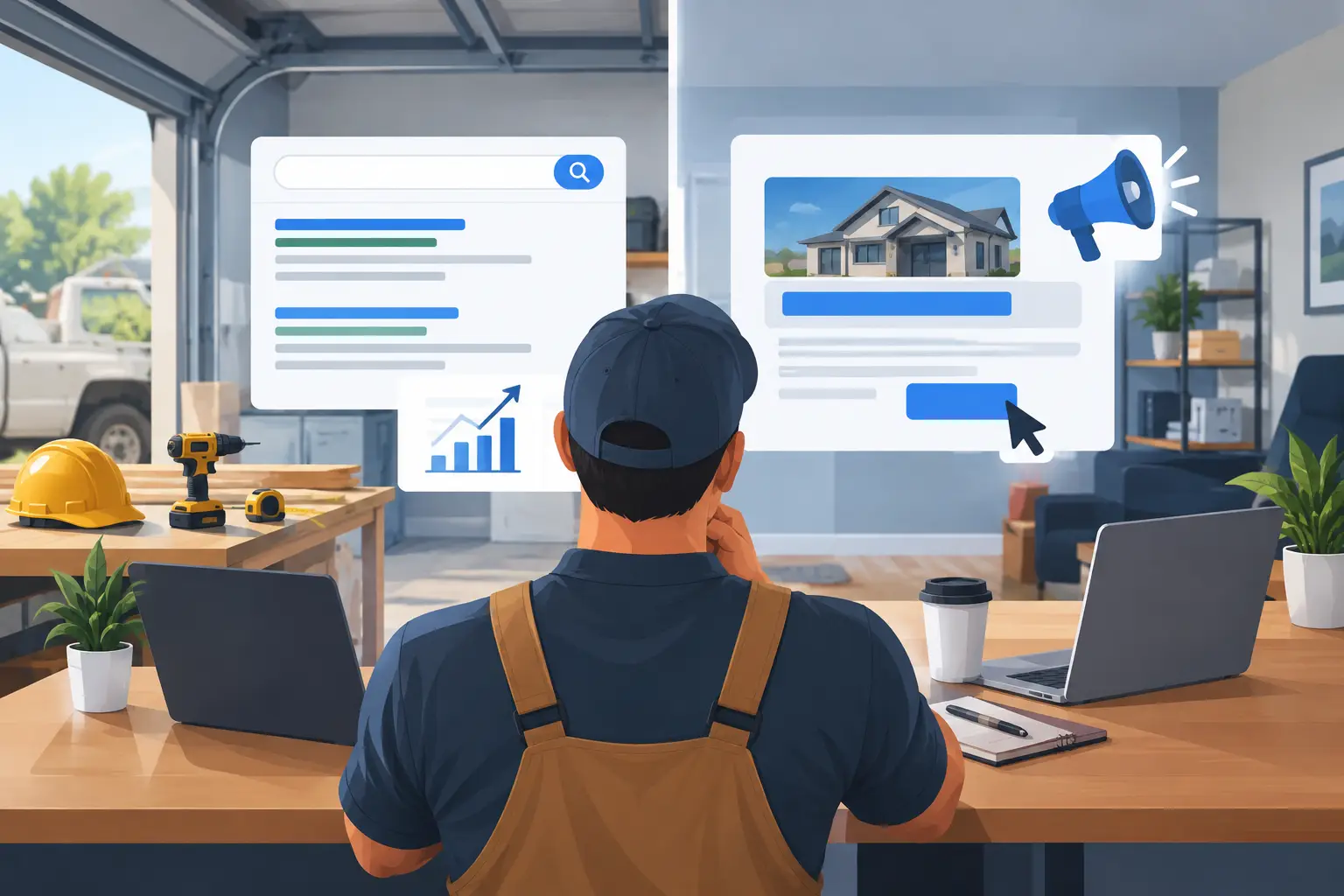
A slow phone is expensive. Your crews still need work, your estimator still needs qualified appointments, and relying on the next referral can leave big gaps in the schedule. That is why the SEO versus PPC contractors question is not really about which marketing channel is better. It is about which one can produce the right kind of local opportunity for the stage your business is in.
For a remodeling company, roofer, plumber, electrician, or specialty trade, both channels can work. They simply work on different timelines and solve different problems. SEO builds your position in the local market over time. PPC can put your offer in front of homeowners who are actively looking right now. The best choice depends on your service area, margins, lead capacity, seasonality, and how well your website converts a visit into a call or form submission.
SEO versus PPC for contractors: the core difference
Search engine optimization helps your business appear in unpaid search results and local map listings when people search for services in your area. A homeowner searching “kitchen remodeler near me” or “emergency electrician in [city]” is already showing intent. SEO helps you earn visibility for those searches through a well-built website, service pages, location relevance, reviews, business listings, and useful content.
PPC, or pay-per-click advertising, buys placement in search results. You choose the services, locations, search terms, budget, and hours you want to target. When someone clicks your ad, you pay for that visit. Google Ads can generate calls quickly, but the leads stop when the budget stops.
Think of SEO as building owned visibility in your market. It takes consistent work, but its value can compound. Think of PPC as renting attention. It is fast, flexible, and measurable, but every qualified click has a price.
Neither is a magic faucet. A poor website, weak reviews, unclear service areas, or slow follow-up can waste both organic traffic and ad spend. Marketing gets the lead to the door. Your offer, reputation, and response time determine whether that lead becomes an estimate.
When SEO is the stronger investment
SEO is usually the better first investment for contractors who want lasting local market share and have the patience to build it. It is particularly valuable for established trades businesses that plan to serve the same cities, counties, or neighborhoods for years.
A strong local SEO program makes it easier for the right prospects to find you across the full buying cycle. Some homeowners are ready to call today. Others spend weeks comparing contractors, reading reviews, studying project galleries, and checking whether a company works in their neighborhood. Showing up consistently builds familiarity before the estimate request arrives.
SEO also suits services with steady, repeatable demand. If you want more bathroom renovations, deck builds, HVAC replacements, drain cleaning, or electrical panel upgrades in defined areas, dedicated service and location pages can become durable lead assets. Unlike a single ad campaign, those pages can continue attracting relevant searches after the initial work is done.
That said, SEO is not instant. Competitive markets often require several months of focused work before meaningful gains appear. The timeline depends on the strength of competing businesses, the size of your service area, the quality of your site, and your current local presence. A contractor expecting a full schedule next week should not treat SEO as an emergency fix.
SEO makes the most sense when your business needs to:
- Build a dependable base of non-paid local inquiries over time
- Compete in a specific geographic market rather than chase work everywhere
- Strengthen trust with reviews, project proof, and useful service information
- Lower dependence on referral swings and paid lead platforms
When PPC is the smarter move
PPC is the right tool when speed matters. Maybe you have an opening in the schedule, added a crew, launched a new service, or need to generate more estimates before a seasonal rush. With the right setup, search ads can start driving qualified traffic within days rather than months.
It also gives you control that SEO cannot match. A remodeling contractor can run ads only within profitable zip codes. A roofing company can increase budget after storm damage. A plumbing business can limit ads to business hours if nobody is available to answer after-hours calls. If a service is producing low-value leads, it can be paused quickly.
The trade-off is cost and management. High-intent contractor keywords are competitive. Clicks for terms such as bathroom remodeling, roofing repair, and emergency plumbing can be expensive, especially in larger metros. If your ads send prospects to a generic homepage or a contact page with no clear reason to act, you can burn through budget without getting enough quality appointments.
Good PPC is more than turning on ads. It requires tight geographic targeting, service-specific messaging, negative keywords that filter out irrelevant searches, call tracking, landing pages, and ongoing review of what actually becomes booked work. A campaign that produces lots of calls is not necessarily a good campaign if those calls are outside your service area, price shopping, or looking for work you do not provide.
The decision should start with capacity, not channels
Before putting money into SEO or PPC, look at the operational picture. Can your team handle more estimates this month? Which services have the healthiest margins? Which areas create the shortest drive times and the best project values? How quickly does someone answer a new inquiry?
If you need opportunities now and can handle them, PPC gives you a practical way to test demand. Start narrow. Choose one or two priority services, target your best service areas, and send traffic to a page built for that exact job. Track not just clicks and calls, but booked estimates, closed jobs, and revenue.
If your pipeline is stable enough to invest for the next six to twelve months, SEO should be running in the background. Build pages around the services you want more of. Improve your local business profile, earn and respond to reviews, correct business citations, and show real projects from the communities you serve. This is how a contractor becomes the familiar, credible choice before a homeowner is ready to request a quote.
For many growing businesses, the answer is not SEO or PPC. It is a phased combination. PPC can help fill near-term gaps while SEO establishes the local foundation that reduces your dependence on ads over time.
Why the website decides whether either channel pays off
A contractor website should not read like a brochure that happens to be online. It should answer the questions a homeowner has before they call: Do you do this kind of work? Do you serve my area? Can I trust you in my home? What happens when I reach out?
For SEO, clear service pages and local relevance help search engines understand where and how you work. For PPC, focused landing pages improve the odds that an expensive click turns into a real inquiry. In both cases, the essentials are similar: strong project photos, proof of licensing or credentials where relevant, reviews, clear service areas, direct calls to action, and an easy way to request an estimate.
Speed matters too. A homeowner who submits a form to three contractors may hire the first qualified business that responds professionally. Automated confirmations help, but they do not replace fast human follow-up. If lead response is inconsistent, fix that before scaling a campaign.
Measure revenue, not marketing activity
Rankings, impressions, clicks, and website visits are useful signals. They are not the finish line. A better scorecard tracks calls, forms, qualified leads, estimates booked, close rate, average job value, and cost per acquired customer.
This is where contractors often find the real issue. A campaign may be generating leads, but the business is declining jobs outside its ideal scope. Or an ad may look costly until you see that one closed basement renovation covers several months of spend. The numbers need context from the field, not just a dashboard.
Noble Media approaches this by connecting local visibility to the full conversion path: the search result, the page, the call, the estimate request, and the follow-up. That is the difference between collecting marketing data and building a lead system that supports the business.
Put your next dollar where it solves the biggest problem
If the schedule needs help immediately, use tightly managed PPC to create a controlled source of demand. If you want to own more of your market next year, invest in SEO now. If referrals are still carrying the business but feel unpredictable, build both carefully, starting with the services and neighborhoods that produce your best jobs.
The practical goal is not to win an argument about channels. It is to make sure a homeowner in your service area can find, trust, and contact your company when they are ready to hire. That is how scattered marketing turns into a steadier pipeline and stronger local market share.