

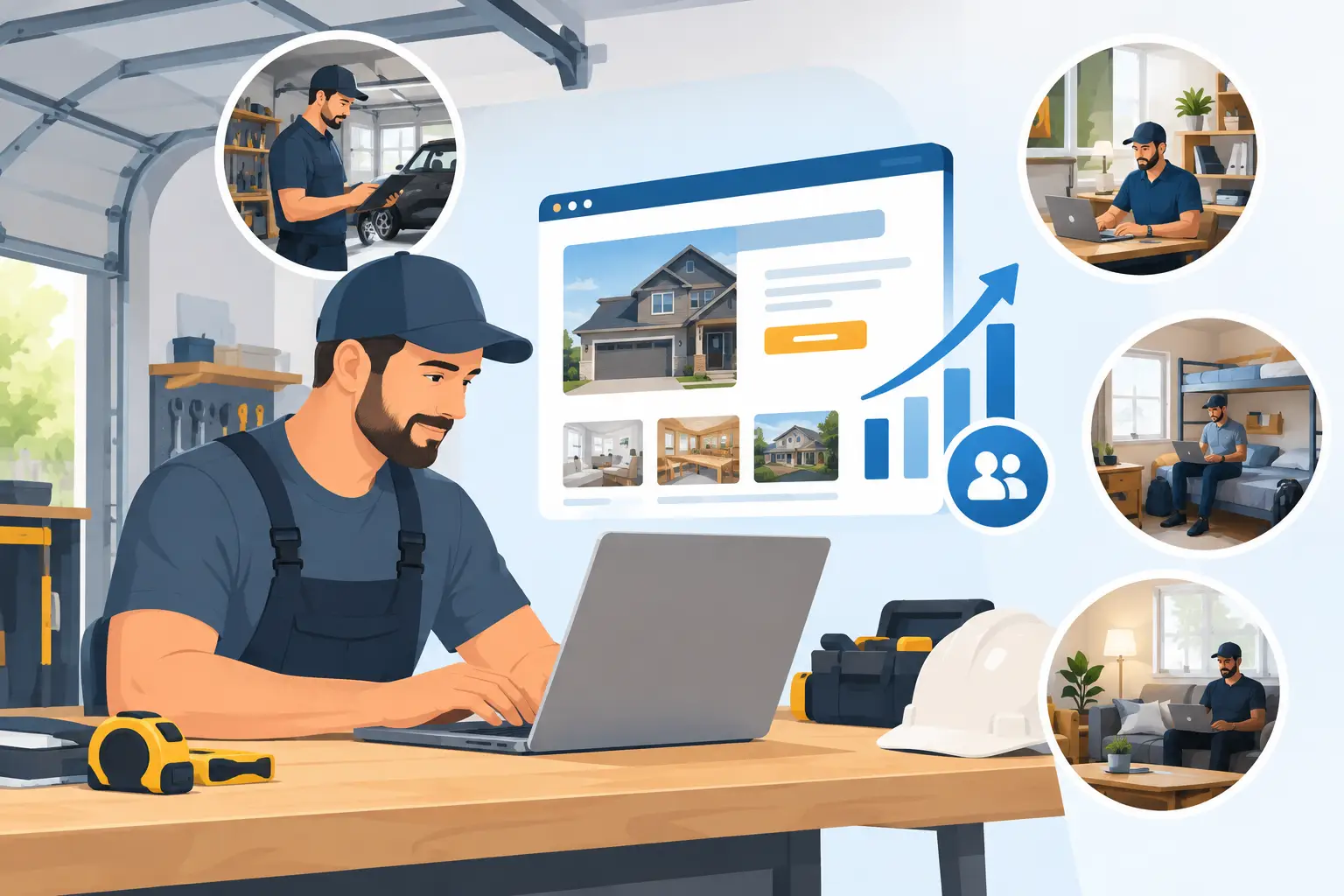
A homeowner lands on your website after searching for a kitchen remodeler, roofer, electrician, or concrete contractor in their area. They are interested, but they are also comparing options quickly. If your site makes them hunt for proof, service details, or a way to contact you, they move on. Contractor website conversion optimization is the work of turning that local interest into qualified calls, estimate requests, and booked jobs.
Traffic matters, but traffic alone does not keep crews busy. A website can rank well or receive paid-ad clicks and still underperform if it does not give prospects a clear reason to choose your company. For contractors, the goal is not to collect every possible lead. The goal is to create a dependable system that attracts the right work in the right service area.
Start With the Job Your Customer Wants Done
Most contractor websites lead with the company: how long you have been in business, what you value, and the services you offer. That information matters, but it is not where a stressed homeowner starts. They start with a problem and a desired outcome.
A basement renovation prospect wants to know whether you can make an awkward space functional. A homeowner with a leaking roof wants confidence that someone will respond, inspect the issue properly, and explain the repair. A commercial property manager needs a contractor who can work within scope, schedule, and site requirements.
Your homepage and service pages should make that connection within seconds. State the service, the locations you serve, and the result customers can expect. Then support the claim with specifics. Instead of saying you provide quality renovations, explain the type of projects you handle, your process, and what makes your work a safer choice than the next company in the search results.
This is where broad messaging costs leads. If you do custom bathrooms, whole-home renovations, and kitchen remodels, do not force every visitor through one generic page. Each service has different questions, budgets, timelines, and objections. A focused service page gives the prospect a reason to contact you before they return to Google.
Match each page to search intent
Someone searching for emergency plumbing needs a visible phone number and fast-response messaging. Someone researching a major addition may be months away from choosing a contractor. They need project examples, process details, credentials, and an easy way to request a consultation.
The conversion action should match that intent. A call now button is appropriate for urgent work. A short request form, consultation booking option, or project-planning guide may work better for high-consideration renovations. One is not automatically better than the other. It depends on how customers buy your service and how your team handles inquiries.
Make Contacting You Feel Easy and Safe
Many contractor sites lose prospects at the exact moment they are ready to act. The contact form is too long, the phone number is buried, or the call to action is vague. Asking a homeowner to submit a message is weaker than telling them what happens next.
Use direct language such as Request Your Estimate, Book a Site Visit, or Talk to a Project Specialist. Place that action near the top of key pages and repeat it after you have earned interest with proof and details. On mobile, a tap-to-call button should remain easy to find. A large share of local service searches happen while the customer is away from a desk, standing in a damaged room, or comparing contractors between errands.
Your form should collect enough information to qualify the opportunity without turning into paperwork. Name, phone, email, location, service needed, and a brief project description are usually enough for an initial inquiry. For renovation work, a budget range and preferred start window can help your team prioritize, but make those fields optional if they could stop a good prospect from submitting.
Speed matters after the form is sent, too. No website can compensate for a lead that waits two business days for a response. Set expectations on the confirmation page and in the automated reply. If your team typically responds within one business day, say so and meet that promise. If you offer same-day emergency service, build the process to support it.
Build Proof Where the Doubt Appears
Hiring a contractor can feel risky to a homeowner. The project may affect their savings, home life, and trust in the people entering their property. A polished logo does not remove that concern. Specific proof does.
Put real project photos on relevant service pages, not only in a gallery few people visit. Show before-and-after results when they tell a clear story. Add short descriptions explaining the scope, the challenge, and the outcome. A kitchen renovation case study is more persuasive when it explains how you improved layout, storage, and schedule coordination than when it simply shows attractive cabinets.
Reviews should also be close to decision points. A testimonial about clean work sites and reliable communication belongs on a renovation page. A review praising quick response belongs on a repair or emergency page. Generic five-star claims have less impact than feedback that addresses the concern in front of the prospect.
Credentials, insurance, licensing, warranties, manufacturer certifications, and trade affiliations can strengthen confidence, but only if they are clear and current. Do not bury these details in a footer. Show them where a prospect is deciding whether to call.
Contractor Website Conversion Optimization Needs Local Relevance
A visitor should never have to guess whether you work in their area. Mention your core cities, counties, neighborhoods, or service radius naturally across the site. Local relevance helps search visibility, but it also stops wasted inquiries from people outside your workable territory.
Avoid creating thin location pages that swap one town name for another. They do little for trust and rarely produce strong leads. A useful local page explains the service, shares relevant work or testimonials, and reflects the practical conditions customers face in that market. For example, a roofing page may address storm damage patterns in the area, while a renovation page may speak to older housing stock or permit coordination.
If you serve a wide region, be honest about it. A clear service-area map or list can reduce calls that your team cannot take. That is not a loss. Better qualification protects your estimating time and keeps your pipeline focused on profitable work.
Remove the Friction That Quietly Kills Leads
Conversion problems are often basic. Slow pages, tiny mobile text, confusing navigation, stock photos, and broken forms all create hesitation. A homeowner may not articulate why they left, but they notice when a site feels neglected.
Review your website as if you were a first-time prospect on a phone. Can you tell what the company does, where it works, and how to get in touch without scrolling through a long introduction? Do service pages answer common questions about scope, timing, and next steps? Does the contact form submit correctly? Is the phone number clickable?
Watch for distraction as well. Too many menu options, pop-ups, and competing buttons can make a site feel busy without making it useful. Every page should have one primary next step. You can still offer a secondary action for prospects who are not ready, such as viewing project work or reading about your process, but do not ask them to make five decisions at once.
Measure What Happens After the Click
A conversion-focused website is not a one-time build. It needs regular review. Track phone calls, form submissions, booked consultations, and the source of those leads. Then go one step further: identify which leads became estimates, which estimates became jobs, and which channels produce work worth pursuing.
This is where marketing activity becomes operationally useful. A campaign that brings 30 inquiries may look successful until you learn that most are outside your service area or looking for work you do not offer. Ten qualified renovation consultations can be more valuable than 30 low-fit calls.
Use those patterns to improve the site. If people repeatedly ask whether you handle permits, answer that question on the relevant page. If paid traffic reaches a service page but rarely contacts you, test a clearer offer, stronger project proof, or a simpler form. If a certain city produces high-value jobs, give that market more focused attention.
Noble Media approaches this work as a contractor growth system, not a cosmetic redesign. The strongest websites define the customer, guide them toward the right action, and keep improving every touchpoint based on real lead quality.
Your website should not sit online like a digital brochure waiting for referrals to validate it. It should make the next good customer feel confident enough to pick up the phone, describe the project, and give your team a real chance to win the work.