

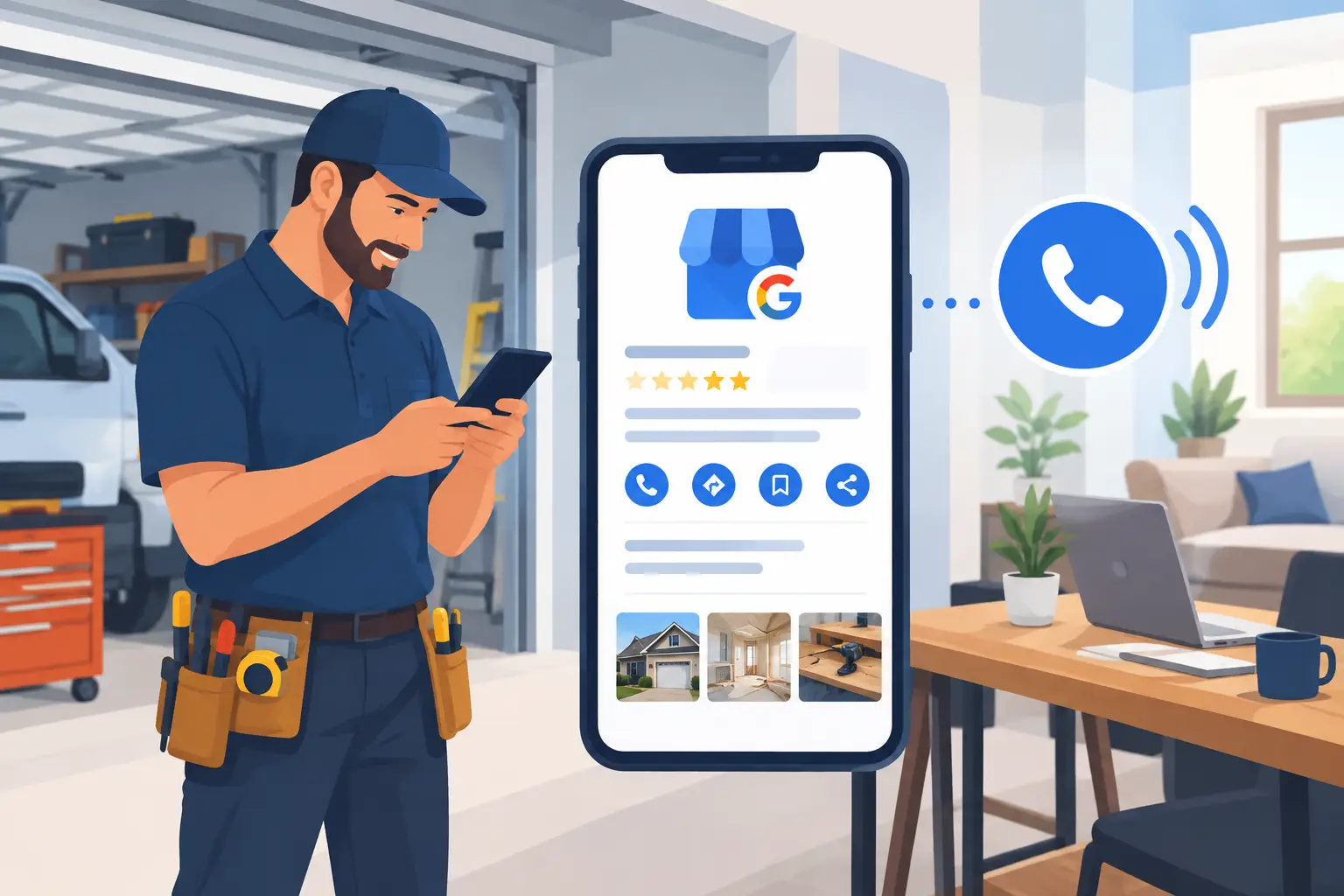
When a homeowner searches “bathroom remodeler near me” after work, they are not looking for a marketing lesson. They want a credible local contractor who answers the phone, has proof of good work, and serves their neighborhood. A properly managed Google Business Profile for contractors puts your company in that decision window – often before a prospect ever visits your website.
For trade businesses, this profile is not a set-it-and-forget-it directory listing. It is a local lead asset. It supports your website, reviews, service-area SEO, and paid campaigns by giving Google clear signals about where you work, what you do, and why nearby customers should trust you with an estimate.
Why Google Business Profile Matters for Contractors
Google’s local results are built for immediate intent. A homeowner searching for an emergency plumber, a roofing contractor, or a kitchen renovation company is usually closer to action than someone casually scrolling social media. Your profile can place your phone number, reviews, hours, photos, services, and directions in front of them at the exact moment they are comparing options.
That visibility is valuable, but it is competitive. The contractor with the most reviews is not automatically the one who wins. Google also considers relevance, distance, profile completeness, activity, and trust signals across the web. A company with a clear service offering, strong project photos, accurate business details, and a steady flow of genuine reviews can outperform a larger competitor with a neglected listing.
There is one major trade-off: a profile can generate attention without generating the right jobs. If your listing is vague, homeowners may call for work you do not perform, outside your travel range, or below your minimum project size. The goal is not more calls at any cost. The goal is qualified local inquiries your team can actually convert.
Set Up a Google Business Profile for Contractors Correctly
Start with the basics, but do not treat the basics as minor details. Your business name, primary phone number, website, and operating hours must match the information customers see elsewhere. Conflicting details create friction for homeowners and reduce confidence in your business.
Choose categories based on your core revenue
Your primary category should reflect the work you want more of, not every service you could possibly provide. A remodeling company should not lead with a broad category if kitchen and bath renovations are the work that drives revenue. A roofing company should not present itself first as a general contractor simply because it occasionally handles related repairs.
Then add relevant secondary categories for real services you actively offer. This helps Google understand your business without turning the listing into a cluttered catch-all. Think like a homeowner: what would they search when they have a project, a problem, and a budget?
Build your service area around reality
If customers do not visit your office or shop, set up the profile as a service-area business. Define the cities, towns, or ZIP codes you genuinely cover. Do not create a separate listing for every nearby community or use a virtual office just to appear closer to a market. Those shortcuts can create verification problems and put the profile at risk.
For contractors with a physical showroom, office, or yard where customers are welcome, displaying an address may make sense. It depends on how your operation works. If the address is visible, make sure the location is staffed during stated hours and that customers can reasonably visit it.
Write for homeowners, not search engines
Your business description should explain what you do, who you serve, and what makes your process dependable. Avoid city-name stuffing and generic claims such as “best contractor.” Instead, be specific: mention the renovation types, trade specialties, project approach, or local expertise that matter to your ideal customer.
A strong description can set expectations early. If you specialize in full kitchen renovations, say so. If you handle insurance restoration, mention it. If you are licensed, insured, and focused on detailed scopes and clean job sites, that is useful information for a homeowner deciding whom to call.
Turn Your Profile Into Proof of Your Work
Contracting is visual. Homeowners want evidence that you can deliver the finish quality they expect, especially before they commit to an on-site consultation. Your photo strategy should show more than a logo and one polished finished room.
Add current exterior photos if customers visit your location, team photos that make the business feel real, branded vehicles, and jobsite images that demonstrate organization and professionalism. Most importantly, show completed work. Before-and-after images, close-ups of craftsmanship, and photos that show the scale of a project help prospects picture the result in their own home.
Keep image quality high, but do not wait for a magazine-perfect portfolio. A clean, well-lit photo from a real project usually builds more trust than a stock image. Update photos regularly so the profile looks active and reflects the type of jobs you want now.
Your services section deserves the same attention. Create service entries around meaningful customer needs, such as kitchen remodeling, basement finishing, roof replacement, panel upgrades, or drain repair. Use plain-language descriptions that explain the outcome and scope. This gives Google more context while helping homeowners self-select before they contact you.
Posts can support this work when you have something useful to share: a recently completed project, a seasonal service reminder, a financing offer, or an explanation of your consultation process. They are not a replacement for a strong website or consistent local SEO. Use them to reinforce trust, not as another task that steals hours from the field.
Build a Review Process Your Crew Can Maintain
Reviews are often the deciding factor when two contractors appear equally qualified. A homeowner may tolerate a slightly higher price if the reviews repeatedly mention communication, clean work, accurate timelines, and problem-solving. Those are the issues that make a renovation feel safe.
The best time to request a review is shortly after a positive project milestone or completion, when the customer is happy with the result and your work is fresh in their mind. Make the request simple. Your project manager, office coordinator, or owner can send one polite follow-up message asking for honest feedback.
Do not offer discounts, gift cards, or other incentives in exchange for reviews. Do not pressure customers to leave only five-star feedback. A steady review process built around real customers is more credible and more durable than a sudden spike that looks manufactured.
Respond to every review, including the difficult ones. Thank positive reviewers specifically without sharing private project details. For negative feedback, stay calm, acknowledge the concern, and move the detailed resolution offline. A professional response will not erase a bad experience, but it shows future customers how you handle problems when a project gets complicated.
Avoid the Mistakes That Waste Local Visibility
Many contractor profiles underperform because nobody owns them. The phone number changes, holiday hours are wrong, photos are years old, questions go unanswered, and the service area no longer reflects where the company wants to work. These are small failures individually, but together they signal an unreliable operation.
Avoid using the profile description to list every town within driving distance. Avoid loading the business name with keywords that are not part of your real-world name. Avoid selecting categories for services you subcontract occasionally or do not want to sell. These tactics may bring irrelevant leads, customer disappointment, or a profile suspension.
Also watch for duplicate listings. They often appear after a move, rebrand, ownership change, or past marketing provider. Duplicate profiles can split reviews and confuse Google about which business information is correct. Clean them up before putting more effort into content and reputation building.
Measure What Happens After the Search
A good profile should be managed like a lead source, not a vanity metric. Track calls, website visits, direction requests where relevant, form submissions, booked estimates, and closed jobs. Then ask better questions: Which services trigger the strongest inquiries? Which neighborhoods produce profitable projects? Are calls coming in during hours when your team can answer them?
This is where your profile connects to the rest of your marketing funnel. If Google Business Profile traffic lands on a generic homepage, homeowners may leave without taking action. A focused service page, clear estimate request path, strong project gallery, and fast follow-up give that local visibility somewhere productive to go.
Noble Media approaches local contractor marketing as a connected system: profile visibility, website conversion, reputation, geographic targeting, and reporting all working toward stronger jobs in the areas you want to own. Your Google profile is a powerful starting point, but it performs best when the rest of the customer journey supports it.
A homeowner searching today may call the contractor whose listing feels most active, credible, and easy to contact. Keep your profile accurate, show the work you are proud of, and make it clear where and how you can help. That is how local visibility turns into a steadier pipeline instead of another marketing task sitting unfinished on your list.