

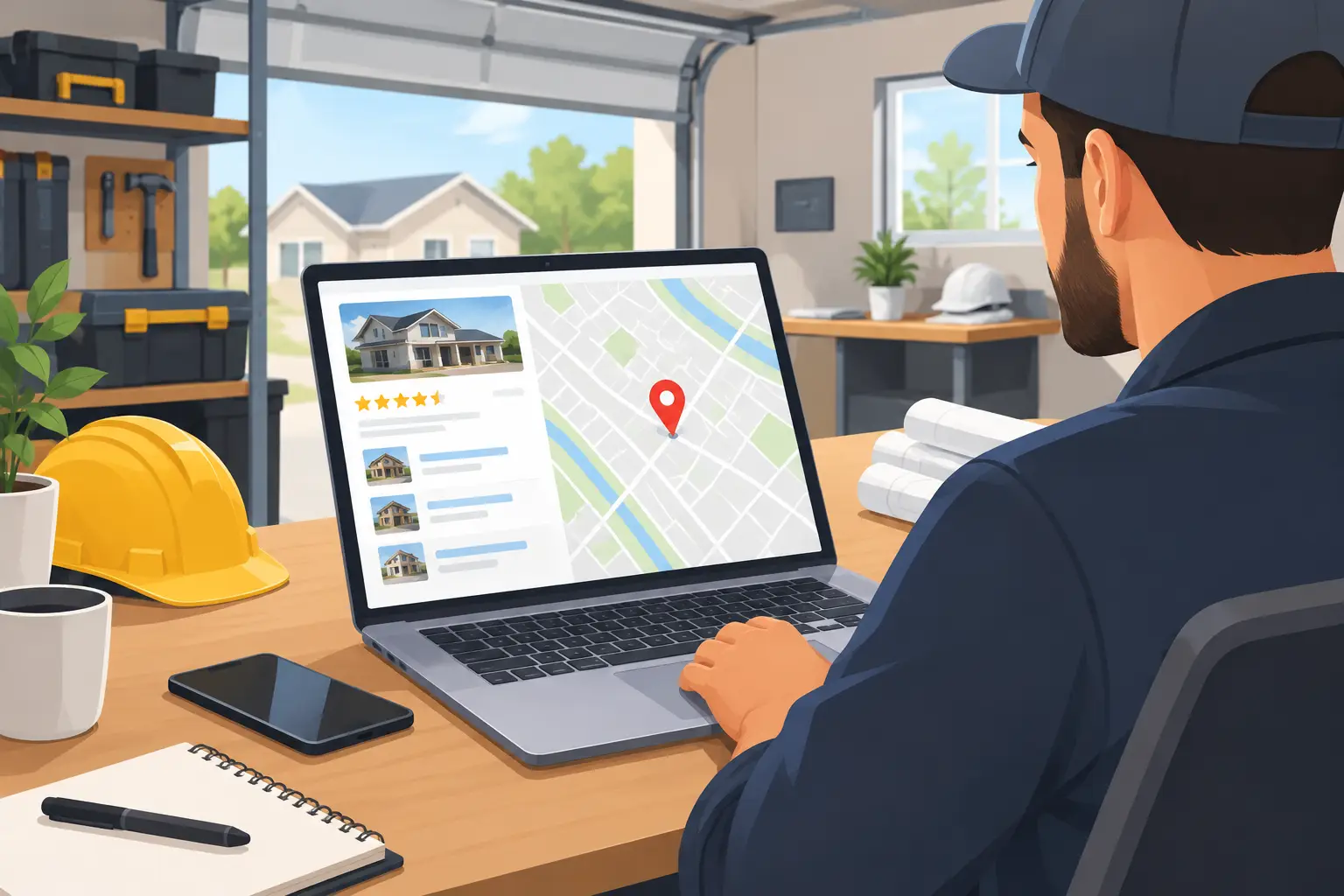
A homeowner with a leaking roof, an outdated kitchen, or a basement they finally want finished is not looking for a marketing agency. They are looking for a contractor they can trust nearby, right now. Construction company SEO puts your business in front of that buyer before they call the company that happened to rank first.
For contractors, visibility is not about chasing vanity traffic from across the country. It is about earning more calls from the towns, neighborhoods, and service areas where you can do profitable work. When referrals slow down, a strong local search presence gives your company another dependable source of qualified opportunities.
What construction company SEO is really built to do
SEO is the work of improving how your website and local business presence appear in search results. For a construction company, that means showing up when people search terms such as “kitchen remodeler near me,” “roof repair in [city],” or “commercial contractor [service area].”
The goal is not simply to get more website visits. A homeowner searching for remodeling ideas may be months away from hiring. A property manager searching for emergency restoration has an immediate problem and a budget attached to it. Good SEO attracts both, then gives each person a clear next step.
That difference matters. More traffic does not automatically mean more work. The right strategy focuses on high-intent local searches, builds trust fast, and makes it easy for a prospect to request an estimate, call your office, or submit project details.
Start with the work you want more of
Many construction companies make the same mistake: they try to rank for every service, every town, and every type of project at once. The result is a vague website that does not clearly tell Google or customers what the company does best.
Start with your strongest, most profitable services. If kitchen renovations create better margins and smoother projects than general handyman work, your website should make kitchens a priority. If you want more roofing jobs within a 30-mile radius, build your local content around roofing, not broad construction language.
Your target services should reflect capacity as well as ambition. There is little value in ranking for large additions if you do not have the crew, cash flow, or project management bandwidth to take them on. SEO works best when it supports the business you are prepared to grow.
A practical service plan usually identifies three things: the services you want to sell, the locations you can serve well, and the type of customer most likely to hire you. That is the foundation for every page, review request, and local campaign that follows.
Build pages for real buying decisions
Your core service pages should answer the questions a serious prospect asks before reaching out. What work do you handle? What does the process look like? Which areas do you serve? What proof do you have? How does someone get an estimate?
A page titled “Home Renovations” with two short paragraphs is rarely enough to compete. A useful kitchen remodeling page, for example, can explain your design-build process, typical project scope, permit experience, material options, project gallery, service area, and consultation process.
Do not fill pages with repeated city names in an attempt to force rankings. Search engines have become better at spotting thin, repetitive location content. Write for the homeowner first, then use location details where they genuinely help. Mention the communities you serve, local permit familiarity, common housing styles, and the type of work you complete in those areas.
Your Google Business Profile is a lead-generation asset
For local contractors, the map results can be more valuable than a standard organic ranking. Your Google Business Profile is often the first thing a prospect sees: your reviews, photos, service area, business hours, phone number, and recent activity all shape the decision to call.
Keep every detail accurate. Use your real business name, a local phone number, current hours, correct service categories, and a consistent address or service-area setup. If you operate from a home office and travel to customers, use the appropriate service-area configuration rather than displaying an address customers cannot visit.
Photos matter more than most contractors expect. Upload clear, current images of completed work, crews on site, branded vehicles, and project progress. A collection of stock photos cannot provide the same confidence as proof that you work in the local market.
Reviews are equally important. Ask for them after a successful project milestone or at final walkthrough, when the customer can speak clearly about the experience. Make the request simple and personal. Then respond to every review, including the difficult ones, in a calm and professional way. Prospects are not only reading the star rating. They are judging how you handle your reputation.
Construction company SEO needs proof, not promises
Construction is a high-trust purchase. A homeowner may spend more on one renovation than they have spent on a vehicle. They want evidence that you will show up, communicate, protect their home, manage the job properly, and stand behind the result.
Your SEO content needs to carry that proof. Case studies, before-and-after project photos, testimonials, certifications, warranty information, and detailed service explanations all help convert search visibility into inquiries.
Project pages are especially valuable. A page about a finished bathroom remodel in a specific community can rank for relevant searches while showing future clients the quality of your work. Keep it useful rather than promotional. Explain the homeowner’s goals, the site challenges, the solution, the work completed, and the final result.
This content also helps separate you from low-bid competitors. Price will always matter, but homeowners who can see your process and craftsmanship are less likely to treat you like a commodity.
Technical basics can cost you real leads
A well-written website will still underperform if it is slow, hard to use on a phone, or confusing to navigate. Most local construction searches happen on mobile devices, often while someone is busy at work or standing in a room they want repaired. If your site takes too long to load or hides the phone number, they will leave.
Your website should make the next action obvious. Put a click-to-call option in a visible location, use short estimate forms, and state when prospects can expect a response. Avoid asking for a complete project brief before someone can contact you. You can qualify leads after they raise their hand.
Technical SEO also includes clean page structure, descriptive titles, properly sized images, secure browsing, and search engines being able to access your pages. These details are not glamorous, but they help search engines understand your site and help customers use it without friction.
Measure leads, not just rankings
Rankings are useful, but they are not the finish line. A number-one position for a low-value search may produce less revenue than a number-four position for a service with strong buying intent.
Track calls, form submissions, consultation requests, and the source of your booked projects. Then look beyond lead volume. Which keywords bring serious homeowners? Which towns produce projects with better margins? Which service pages bring estimate requests that actually close?
This is where ongoing SEO earns its keep. Search behavior changes, competitors invest, reviews accumulate, and service priorities shift. A monthly process of reviewing performance and improving pages is more effective than treating SEO as a one-time website task.
Paid search can also support the plan while organic visibility grows. If you need immediate roofing leads after a storm season or want to test demand in a neighboring city, targeted ads can provide faster feedback. SEO and paid ads work well together when both point to focused pages with a clear conversion path.
Build a local presence your competitors cannot copy overnight
The strongest construction marketing does not rely on one channel. Referrals, reviews, local search, project proof, a fast website, and follow-up all reinforce each other. When a prospect sees your company in the map results, checks your recent work, reads credible reviews, and finds a clear way to request an estimate, the decision becomes easier.
That is how Noble Media approaches local contractor growth: not as a collection of disconnected tactics, but as a system built around the work, locations, and customers you want most.
The next project that changes your year may already be searching in your service area. Make sure your company gives that customer a clear reason to call.